
Constructive Rest: The Best Way To Relax The Psoas and Nervous System
Still the Most Important Pose I Teach (and Do Myself)

Twenty-five years later, constructive rest is still the most important pose I give to people—and the one I do myself. Its effect on the nervous system is unmatched.
If you can spend 15 to 20 minutes a day in constructive rest, you’ll feel the difference. Even five minutes helps.
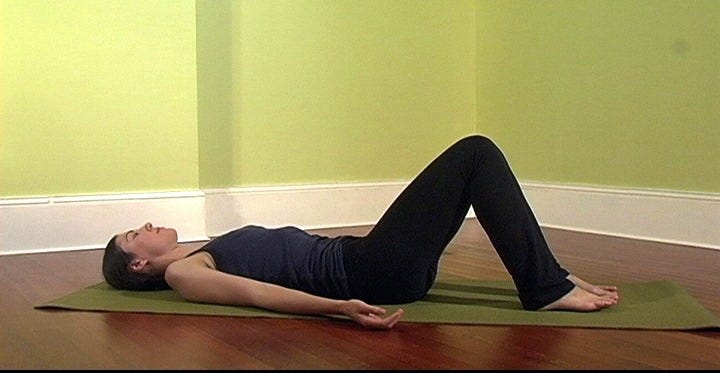
Constructive Rest: What Is a Release?
Constructive rest is my go-to pose for helping people with chronic pain.
Created by Mabel Todd (The Thinking Body), this simple position allows the body to deeply relax. And when it comes to chronic pain and trauma, relaxing the body and mind is everything.
Todd’s Student Lulu Sweigard described it best in her book Human Movement Potential:
“The distribution of structural weight should balance the body so that no muscle work need be added to maintain equilibrium in the position.”
In other words—relax.
Chronic pain disrupts the nervous system. For some people, calming the nervous system is more important than traditional treatment. These are often people who’ve fallen through the cracks—more sensitive to pain and less responsive to standard approaches.
Maybe you’ve been told that “nothing is wrong.”
Maybe PT helped for a while—or made things worse.
Maybe your MRIs look fine even though you’re in constant pain.
That was me. Three knee surgeries later, I finally realized something deeper was going on.
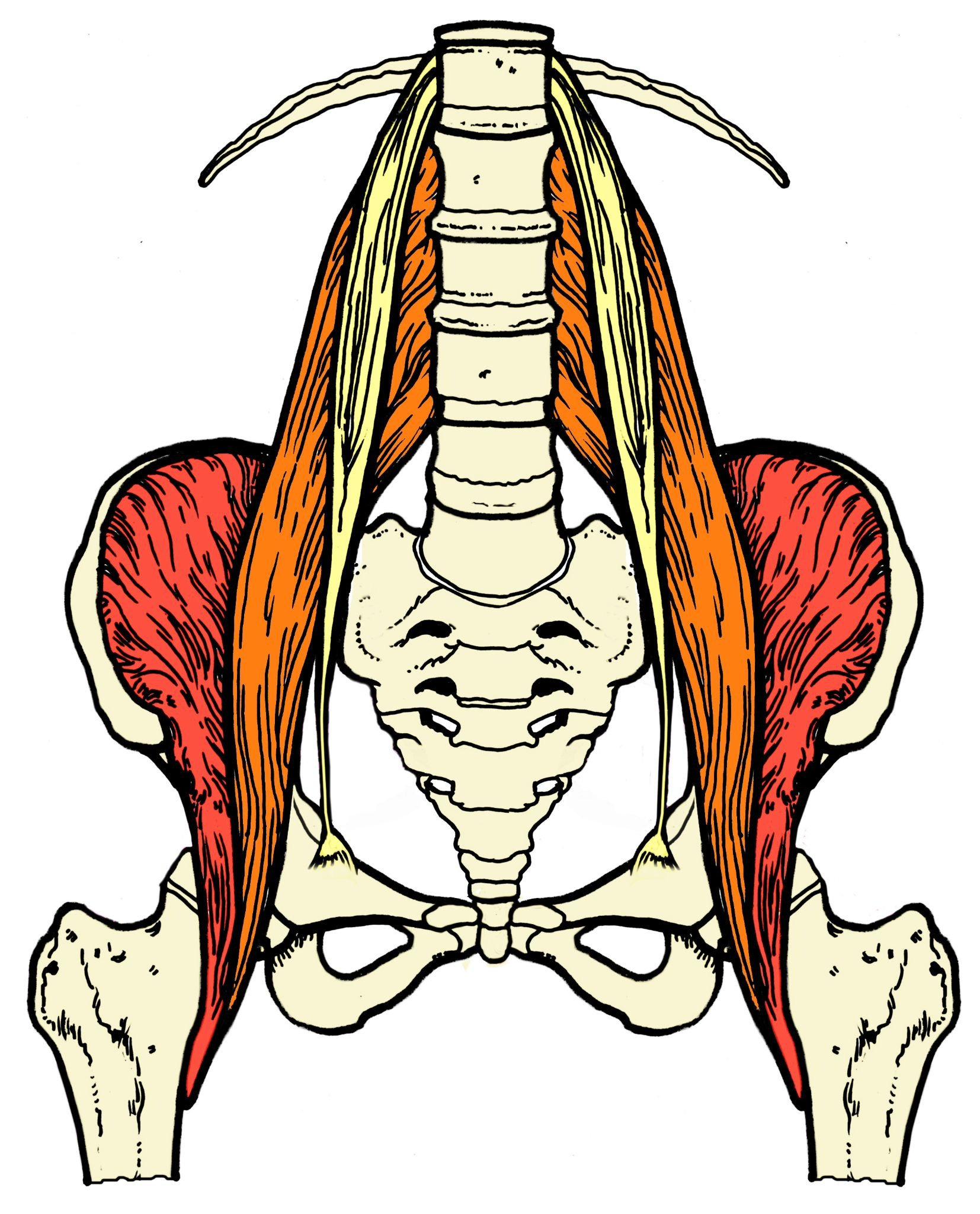
What Is A Psoas?
My journey to a pain-free life began when I learned that I was hypermobile—and that years of advanced yoga were quietly destroying my joints.
I hyperextended my knees without realizing it.
I walked with my feet turned out like a duck.
And those patterns were fueling my pain.
Relearning how to walk and stand led me to the most important muscle in the body: the psoas.
The psoas connects your legs to your spine, running from the inner thighs up to the base of the ribs. It’s a standing muscle, a walking muscle—and, in my experience, a muscle of pain and trauma.
Yes, it’s the place where unprocessed tension and emotion often live. The psoas is uniquely connected to the nervous system—and therefore to chronic pain.
Trauma and the Psoas
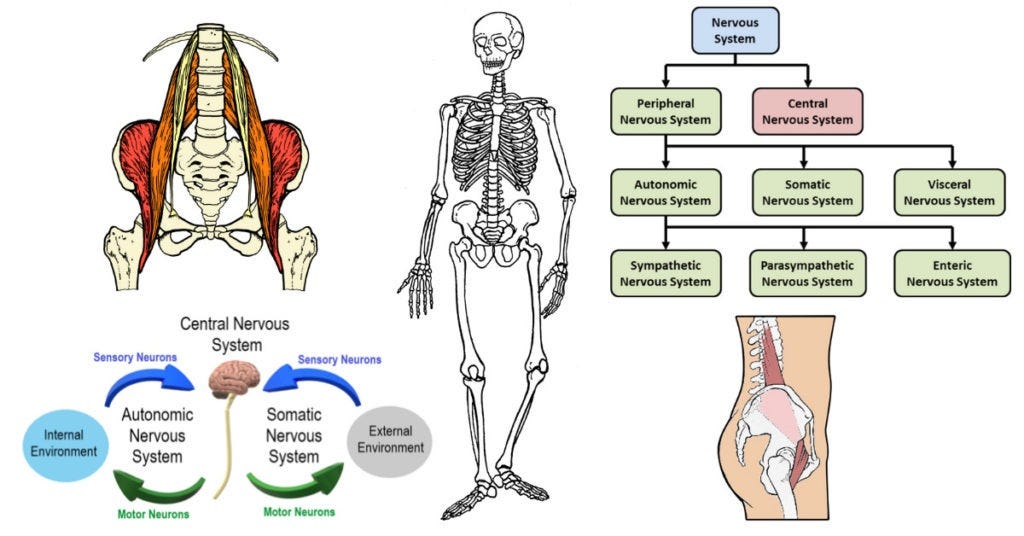
The nervous system has two key branches that keep us balanced: the sympathetic (fight or flight) and the parasympathetic (rest and relax).
When danger appears—real or imagined—the sympathetic system fires up. Your mouth goes dry, your pupils dilate, and your psoas contracts, ready to act.
Once the danger passes, the parasympathetic system restores calm.
That’s how it’s meant to work.
But if you live with chronic stress—a volatile home, unsafe environment, or unrelenting pressure—your body never fully turns off.
The psoas stays engaged, the nervous system stuck in overdrive. That stored energy needs somewhere to go, and it often lands right in the psoas.
Stretch or Release: Which Is Better?
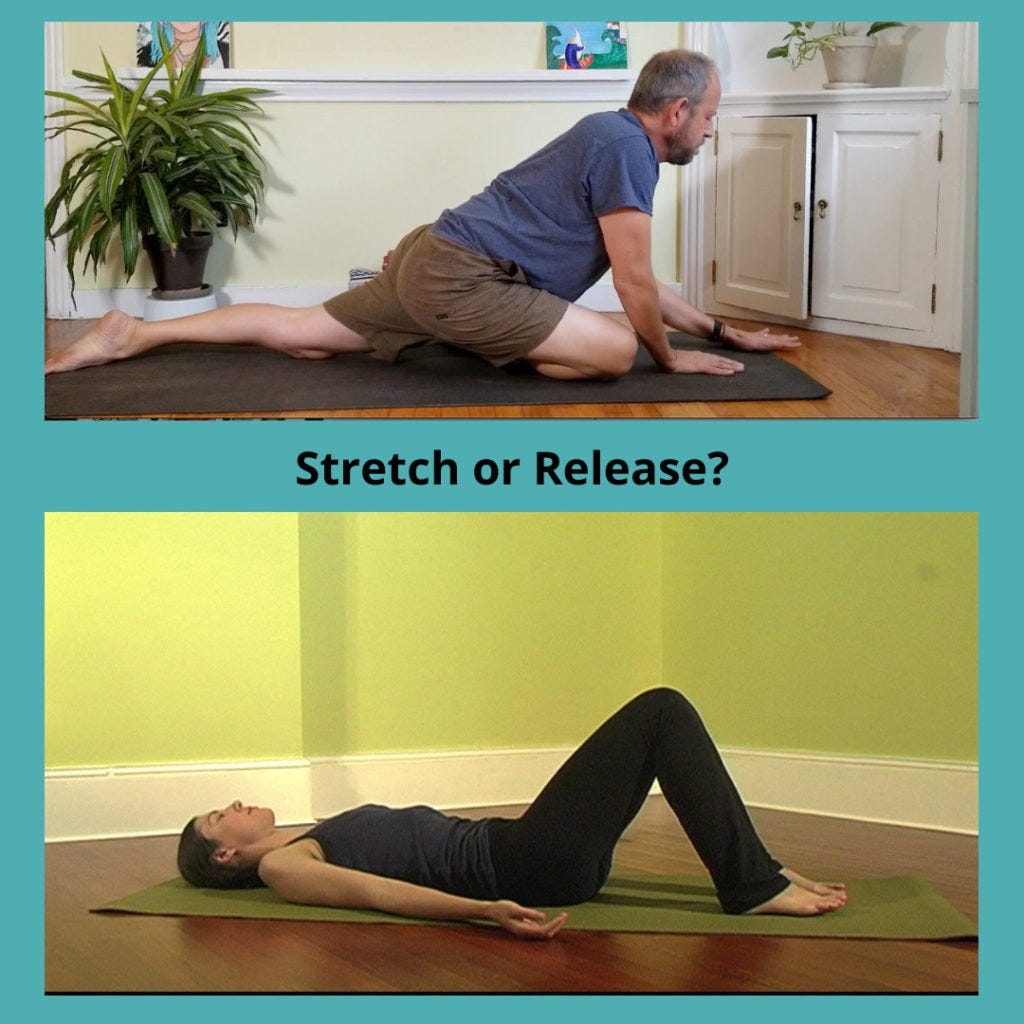
As a yoga teacher, I love stretching and strengthening—they make us healthier, more mobile, more alive.
But you can’t stretch or strengthen your way out of everything.
Doctors rely on tests, PT, meds, injections, maybe surgery. Those tools help some people—but they don’t address pain rooted in a dysregulated nervous system.
For that kind of pain, sometimes you need to do less.
What Is a Release?
A “release” is just another word for relaxing.
It’s not about effort—it’s about allowing.
If that idea resonates, it might be exactly what you need.
Finding freedom from chronic pain can be complex, but the solution doesn’t have to be.
In my workshop Psoas Release Party! I teach several release poses, but constructive rest is the foundation for them all.
Constructive Rest: Psoas I Was Saying…
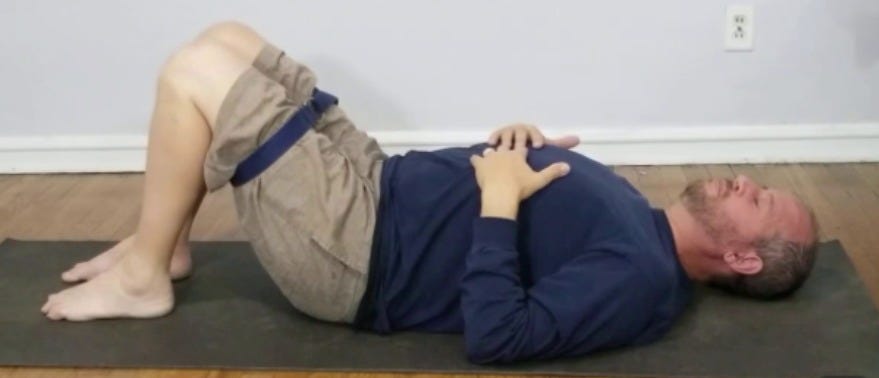
Constructive rest position is the ultimate psoas release.
It helps unlock years of tension that live deep in your core. I’ve seen it quiet nervous systems, ease pain, and even release stored movement patterns.
This is still the pose I recommend more than any other.
Doing nothing for 10 or 20 minutes may sound easy—but for many people, it’s not.
How to Do Constructive Rest
Lie on your back with knees bent and feet flat on the floor. Heels about 12–16 inches from your pelvis, in line with your sit bones.
Loop a belt around the middle of your thighs so your legs can relax effortlessly.
Do nothing. Notice sensations—tension, twitching, emotion—and try to stay with them. Let them pass.
If something feels too intense, move, then return to stillness.
Even if you don’t feel anything, it’s still helping.
If you can’t sleep, do it before bed.
If you wake up in pain, do it first thing in the morning.
If you’ve overdone your workout, do it after.
There’s nothing better for releasing and relaxing the psoas than constructive rest.
For many, it’s the essential first step on the long journey out of chronic pain.
Such a useful and motivating post! Thank you.
Amazing