
Accommodating the Psoas When Sleeping

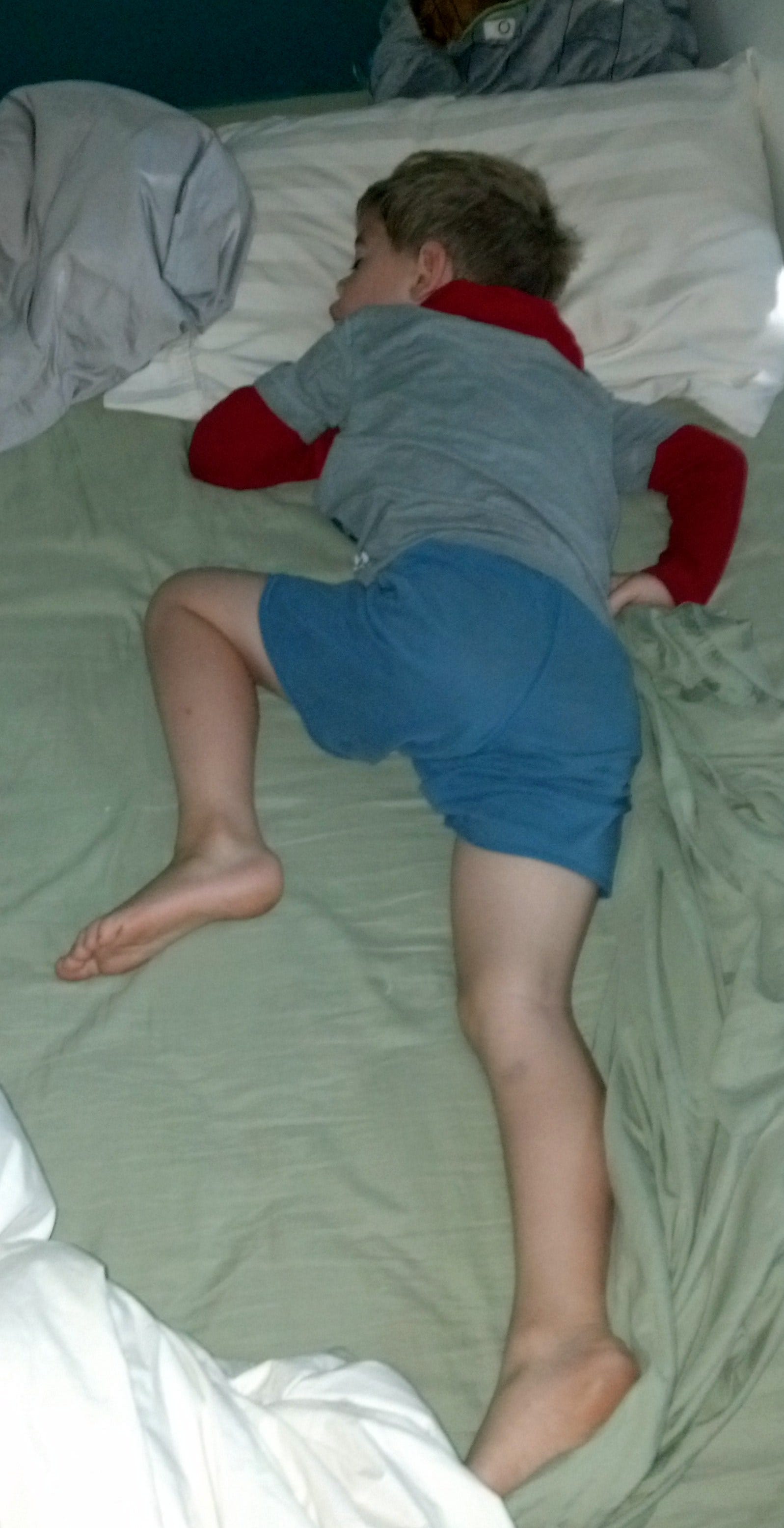
The picture above is my son Reggie as a little boy.
His sleep position mirrors how I slept for the first forty years of my life.
One knee hiked up. Half on the stomach.
Technically it isn’t full-on stomach sleeping — which is even worse — but who really wants to win a misery contest?
Sleeping on your stomach flattens the natural curve of the lumbar spine. From that, no good can come.
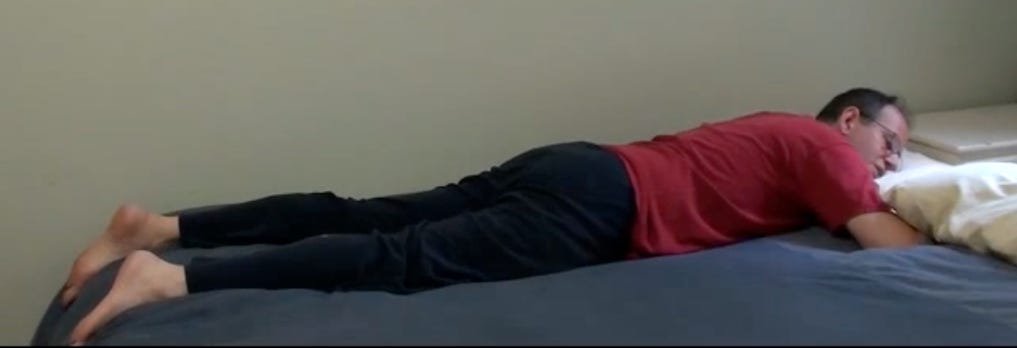
Sleeping with one knee thrown forward creates torque in the pelvis and low back for the duration of the night.
And what about your head and neck. You have to turn one way or the other and can’t be good.
Again, no good can come from holding your pelvis in a twisted position for hours at a time.
Why Do We Do This?
I’ve long believed that many people fall into this position to accommodate a tight psoas.
If your psoas is tight, it feels better to keep the hip flexed. It isn’t better but it feels better.
For years I woke up stiff and achy. My lower back never quite felt right.
When I finally committed to sleeping on my side — legs together, slightly bent — the change was dramatic. Within weeks, the nightly discomfort began to fade.
It wasn’t magic.
It was mechanics.
The Best Way to Sleep (For Your Spine and Psoas)
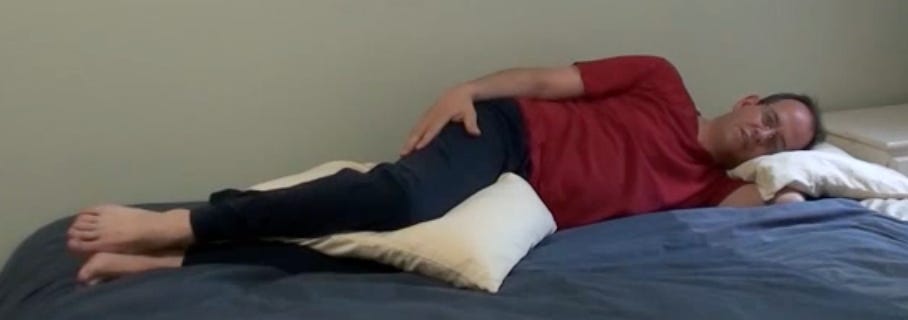
If you want to protect your spine and calm your psoas, here’s what I recommend:
Sleep on your side.
The left side is generally better than the right ( it is better for the flow of cerebrospinal fluid that cleans your brain, and it’s easier on digestion and reflux, and often more neutral for the spine).
Bend your knees slightly — not deeply curled, just soft.
Place a pillow between your thighs to keep the top leg from dropping forward.
That pillow is crucial. Without it, gravity pulls the top leg down, rotating the pelvis and straining the low back.
For my head, I personally use two pillows, stacked so that their combined thickness equals the distance between my mattress and my ear.
That way:
My head is not tilted.
My neck stays neutral.
My spine remains aligned from skull to tailbone.
Alignment matters. If your head is too high or too low, your spine will compensate all night long.
For some clients, I even recommend loosely tying a soft bathrobe sash around the thighs to prevent the top leg from creeping forward during sleep. It sounds extreme, but habits formed over decades don’t disappear politely.
I didn’t need the sash. Many people do. And once you get used to it, you can get rid of the sash.
The Psoas Major
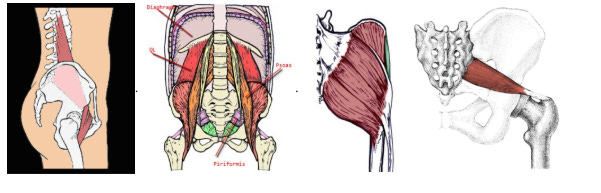
The psoas major is one of only three muscles that connect the legs to the spine. The other two — gluteus maximus and piriformis — connect from the back of the pelvis. The psoas connects from the front.
It is the body’s primary hip flexor.
It works constantly.
Standing, walking, stabilizing.
In my opinion, it is the most important muscle in the body.
(The heart and tongue are important too — but the psoas still wins in my book.)
Because it is a hip flexor, it is deeply involved in our fight-or-flight response. Fear is flexion. When we feel threatened, we curl forward. The hip flexors fire.
If we live in chronic stress — emotional, environmental, or physical — the psoas can remain subtly contracted, always ready.
Over time, that persistent tension can distort posture, strain the lumbar spine, and contribute to chronic pain that seems mysterious and resistant to treatment.
Single traumatic events — car accidents, violence, loss — can also imprint on the nervous system. And in my experience, unprocessed stress often lives in the psoas.
The Pull of a Tight Psoas
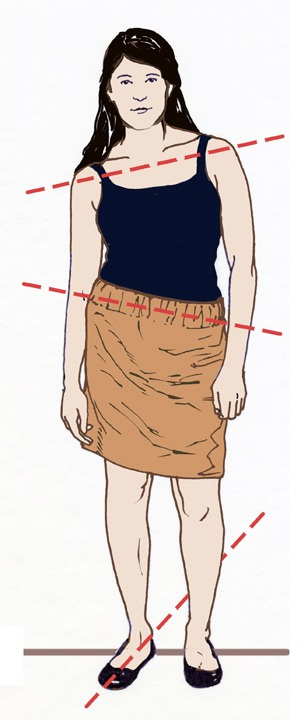
When the psoas is tight, it often pulls:
The leg deeper into the hip socket
The foot outward
The pelvis upward on that side
The shoulder down toward the hip
The entire side shortens.
And when we sleep with one knee hiked forward, we are often reinforcing that asymmetry for six, seven, eight hours.
That’s not neutral rest. That’s repetitive stress.
But What About Reggie?
The funny thing is, I don’t think Reggie has a particularly tight psoas.
He has never seen me sleep that way.
My daughter doesn’t sleep like this.
So why does he?
Maybe it’s genetics. Maybe it’s comfort. Maybe it’s just habit.
But what I do know is this:
So many people carry aches and pains that are relatively easy to resolve — if they’re willing to look at the patterns they repeat without thinking.
Most people never consider that their sleep position could be contributing to their discomfort.
Others suspect it — they wake up stiff, twisted, achy — but feel powerless to change a lifelong habit.
Small Pattern, Big Consequences
Some injuries happen suddenly — a fall, a collision, a sharp trauma.
Others accumulate quietly. Night after night. Year after year.
Sleeping twisted is repetitive stress.
Stop hiking your knee up to accommodate a tight psoas.
Sleep on your side.
Keep your spine aligned.
Support your head properly.
Put a pillow between your thighs.
Changing how you sleep won’t solve everything.
But if pain relief is a puzzle, this is a corner piece.
And corner pieces matter.
PLUS: If you are interested... here are 3 ways I can help you get on the right road to healing:
Download my free eBook.
1. My short eBook, Psoas: The Wonder Muscle, will explain how this deep core muscle holds on to the body’s unprocessed energy and what you need to do to get past the pain and trauma that has held you back for years: Click Here.
Join My Membership Program
2. I have a membership program that is still going strong after 8 years. The membership includes two workshops a month and 2 yoga classes a week. All workshops and classes are recorded and archived to watch at your convenience. Learn More Here
3. Work with me One-on-One
I help people deal with complex pain issues that have not resolved through traditional methods. Schedule a call with me to see if I can help you, and if we would be a good fit to work together: Chat w/ Jonathan
I tried your pushing the knees back when standing. To my delight my right hip straightened and my right shoulder, which always dips, leveled up. Terrific. Thanks